Published
BONE MUSIC
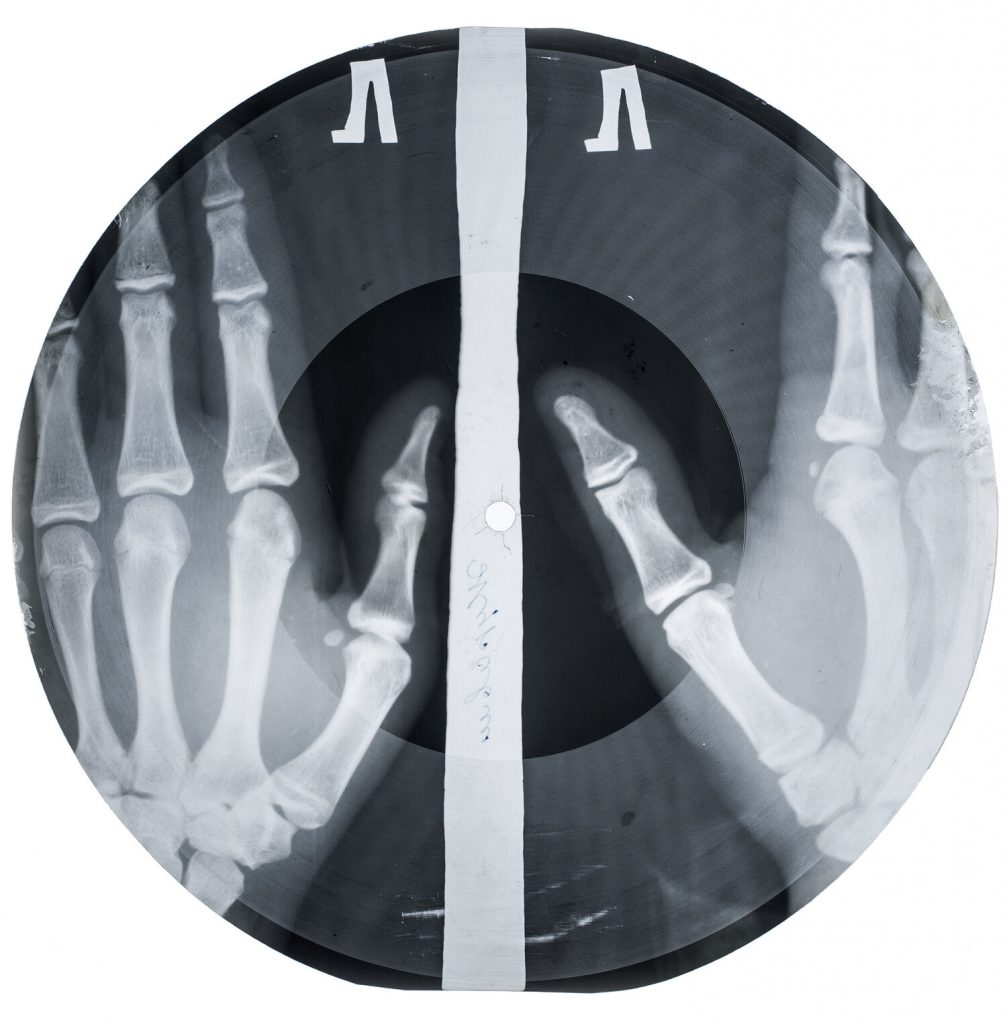
In the USSR during the cold war era, the music people could listen to was ruthlessly controlled by the State. But a secret underground subculture of music lovers and bootleggers defied the censor. Incredibly, they built their own recording machines and used an extraordinary means of copying forbidden jazz, rock ‘n’ roll and banned Russian music to risk making their own records.
“They are images of pain and damage overlaid with the sounds of pleasure, fragile photographs of the interiors of Soviet citizens inscribed with the music they secretly loved”
During the Cold War era, the songs that Soviet citizens could listen to were ruthlessly controlled by the state. But a secret underground subculture of music lovers and bootleggers defied the censors, building recording machines and making their own records of forbidden jazz, rock ‘n’ roll, and Russian music, cut onto used hospital x-ray film. Who were they? Why did they do it and how was it even possible? Based on years of interviews and oral testimonies, Bone Music continues the story of X-Ray Audio, presenting the stories of the original Bone bootleggers, their customers and persecutors, evoking their spirit of resistance to a repressive culture of prohibition and punishment. Bone Music details how the bootleggers worked, outlining the technical precedents of their techniques in the work of their archivist precursors in Budapest and situating their discs in a revised history of recorded media with a wealth of compelling new detail.
Bone Music. Soviet X-Ray Audio.
Edited by Stephen Coates
Published by MIT Press
What would you risk to listen to music?