Published
tracing basalt in the onsernone valley
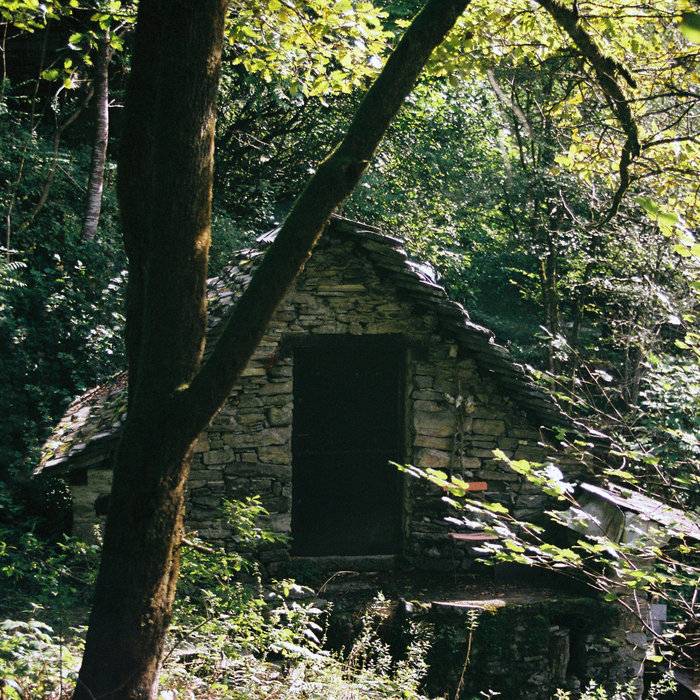
It is said that Basalt (1910 – ?) was a gender non-conforming person born and raised in Berlin. They studied geology while being part of the city’s vibrant queer scene before escaping the Nazi regime in the 1930s. For years, they travelled through Europe until they settled in the Onsernone Valley in the 1950s. Here, Basalt developed a keen ear and relationship to the environment informed by early theories of bioacoustics, psychoacoustics, and ecology. Oozing with poetry, Basalt’s notes revealed a hypothesis of their own emerging from a singular methodology of listening. The core principle of their “sonic imprint theory” was the belief that sound leaves measurable traces in the matter it comes into contact with. Consequently, Basalt spent the rest of their life using their body as a sound recording device in the hopes of creating a sonic archive through their skeleton. In time, they cultivated an intimate and extensive relationship with rocks, birds, rivers, insects, and human locals—such as fellow trans refugee and poet Gian Alessandro Rapp. In the end, nobody knows exactly what happened to Basalt. It is believed that they disappeared in the Onsernone Valley, their body never to be found. Based on Basalt’s last written entry, some speculate that they morphed into a grasshopper and joined, what they called, the insect people.
Inspired by Basalt’s life and writings, Pablo Diserens and Ludwig Berger put Basalt’s thinking and methodologies into practice. The duo followed these aphorisms like a map, listening to the Onsernone Valley and recording the sounds it fostered. As time passed, the landscape unveiled itself differently, and the parallels with Basalt’s experience grew. Sounds became palpable while the boundaries between the two artists and the world blurred. Out of this attempt to bring Basalt’s philosophy back to life, Pablo Diserens and Ludwig Berger created a counter-cartography of the valley’s soundscape, tracing the effects and interrelations of its sonic imprints. Together, the album and Basalt’s writings enact a psychogeographical gesture that urges listeners to reimagine their relationship with the world around them.
During a trip to Switzerland’s Onsernone Valley, Pablo Diserens and Ludwig Berger found a folder labeled “Basalt.” It was filled with sheets of paper covered in typewritten aphorisms: “How deeply does a sound penetrate me before it fades away?” and “My body as a recording device/ My own bones as sound storage/ My skeleton as a sound archive for posterity.” Diserens and Berger discovered that Basalt was the name of a gender non-conforming person who fled Berlin from the Nazis before settling in the Onsernone Valley in the 1950s. There, they started to formulate ideas about sound. Basalt theorized that sound waves leave traces in physical matter—including their own body. They organized a “strict sound diet” to control what would end up recorded in their bones. Tracing basalt in the onsernone valley is Diserens and Berger’s attempt to follow this diet themselves, recreating the listening experiments that Basalt wrote down. Research is ongoing into Basalt’s life; their eventual fate is still unknown. However, this release is the first step in publicizing their remarkable story and circulating their fascinating thoughts about sound, listening, and identity.