Published
Litaniæ Sanctorum (Letanía de los santos)
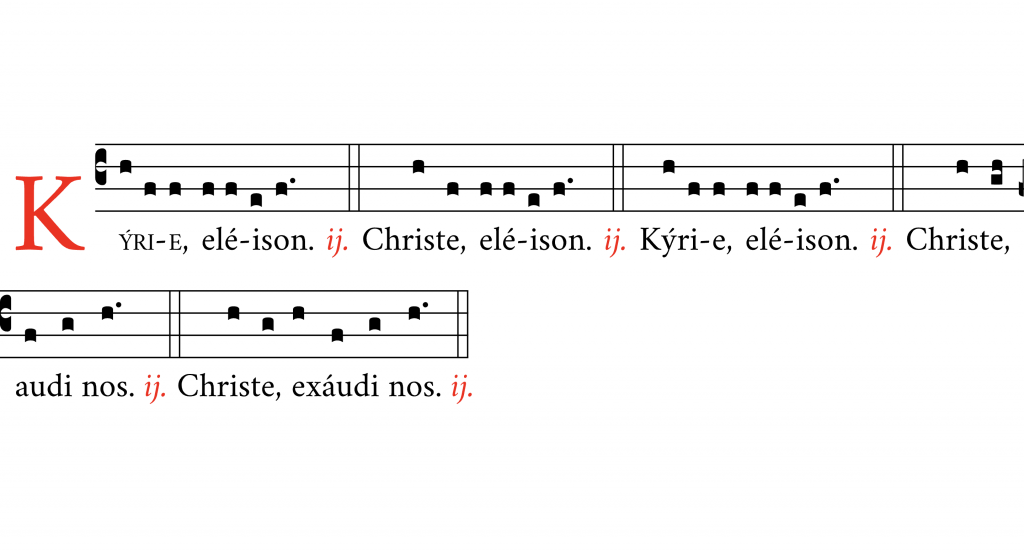
The Litany of the Saints is a prayer asking for the intercession of all Christian saints—that is, those recognised as models of conduct within the Christian worldview. According to the doctrine of both the Catholic and Orthodox Churches, the saints intercede on behalf of the living. It is one of the Catholic Church’s most solemn supplications. It is sung while kneeling, except on Sundays and during Eastertide, when it is sung standing.
It is performed in rites of reparation and at the funerals of the supreme pontiff, cardinals, bishops, priests and deacons, among other clergy: as an entrance chant, during the responsory, when the body is buried, or when it is brought into the church for the vigil.
This version contains the litanies in their plain form, without the variations or specific additions used on Rogation Days, Holy Saturday or during the Forty Hours’ Devotion.
In the mid-eighth century, the Frankish kingdom of Pepin III the Short adopted the Roman liturgy. Roman cantors then crossed the Alps and transmitted the liturgical chants of Rome orally, since the manuscripts contained the texts of the chants but not their melodies.
Under Charlemagne, and through the Benedictine monasteries that spread it throughout Western Christendom, what had already become known as “Gregorian chant” reached its greatest splendour. During the tenth century the repertoire expanded and was copied into manuscripts using different systems of musical notation. The gradual introduction of the four-line staff in the eleventh century allowed melodies to be transmitted with greater precision.
At the end of the Middle Ages, the emergence of polyphony distorted the phrase, melody and, above all, the rhythm of the text, and Gregorian chant entered a period of progressive decline. After it had been rejected by the Renaissance and Protestantism, many attempts were made to restore Gregorian chant according to the modern musical conventions of the early seventeenth century. Disfigured and denatured, it lost its purity and expressive power in the service of the Church’s prayer.
Dom Prosper Guéranger (1805–1875) initiated the restoration of Gregorian chant through the surviving ancient manuscripts. This demanding work, entrusted by the Church to the Abbey of Solesmes (Wikipedia) after Leo XIII, was carried out in the monastery’s workshop of Gregorian palaeography. The work continues today so that, as Pope Pius X wished, everyone may pray with the aid of music’s beauty.
Gregorian musical forms: Gregorian chant belongs to the tradition of the Catholic Church. Its repertoire is found in the liturgical books, principally the Gradual for pieces used in the Mass and the Antiphonary for those used in the Divine Office.
The Divine Office sanctifies the entire day through divine praise. The different parts of the Office—antiphons, psalmody, responsories and Gospel canticles—are collected in the Antiphonary, both for the celebration of the various liturgical seasons and for the feasts of the Lord and the saints. The melodies for the Office are found in the Liber Hymnarius.
Litaniæ Sanctorum (Litany of the Saints) and Officium Defunctorum (Office of the Dead) belong to the “common fund” of Gregorian chant, which is anonymous by definition because it was transmitted orally, refined collectively and never signed.