Published
Nymphes des bois (La Déploration de Johannes Ockeghem)
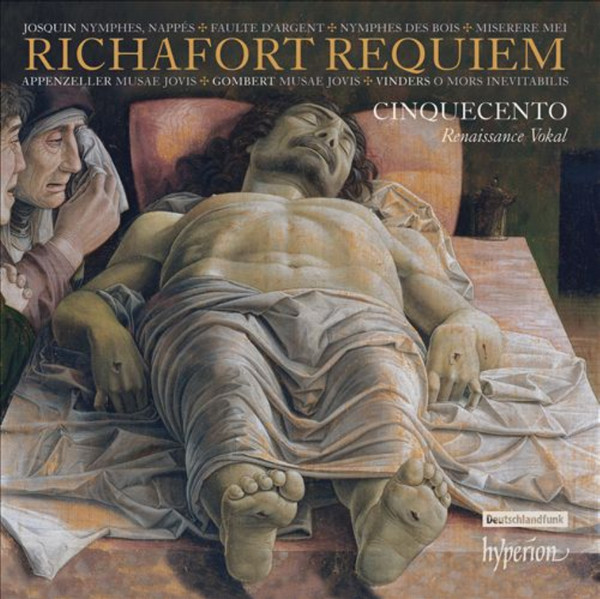
Nymphes des bois, also known as La Déploration de Johannes Ockeghem, is a lament composed by Josquin des Prez on the occasion of the death of his predecessor Johannes Ockeghem in February 1497. The composition is based on a poem written by Jean Molinet (1435–1507). The performance date most likely coincides with the first anniversary of Ockeghem’s death, 4 February 1498.
Nymphes der bois is not just one of the ‘saddest pieces of music ever written’, but is rather seen as a proof of Josquin’s unsurpassed wit and mastery of translating what he wanted to say into music.
Josquin’s music became a model for much of the polyphony composed during the sixteenth century. It appears that whenever he composed a work, he immediately gave it to the choir to sing. He would then walk from one place to another within the church, listening attentively to the harmony. Whenever he heard something that did not fit, he would shout: “Silence! I will change that.”
Johannes Ockeghem composed a lament for the death of his teacher Gilles Binchois, imitating his style. When Ockeghem died in 1497, Josquin—who may have studied with him—also composed a lament for his teacher, likewise imitating his style. The work, subtitled Nymphes des bois, sets a poem by Jean Molinet. Ockeghem favoured complex harmonies, active and richly worked lower lines, and low registers in general. Josquin adopts these same qualities in this remarkable work.
The lament, understood in its broadest sense as a funerary composition in memory of a musician or public figure, has its earliest examples in Renaissance polyphony, as found in works by Johannes Ockeghem, Josquin des Prez, Jacob Arcadelt and William Byrd, among others. The lament as a monodic song of sorrowful and melancholy character, composed as an expression of mourning, reached its golden age during the seventeenth century, particularly in Italy. The emergence of accompanied melody as the preferred texture in the early years of that century—in contrast to the polyphonic and contrapuntal textures dominant in the previous one—gave the lament a central role as an ideal genre for expressing emotionally intense and dramatic moments.