Published
Le Tableau de l’Opération de la Taille
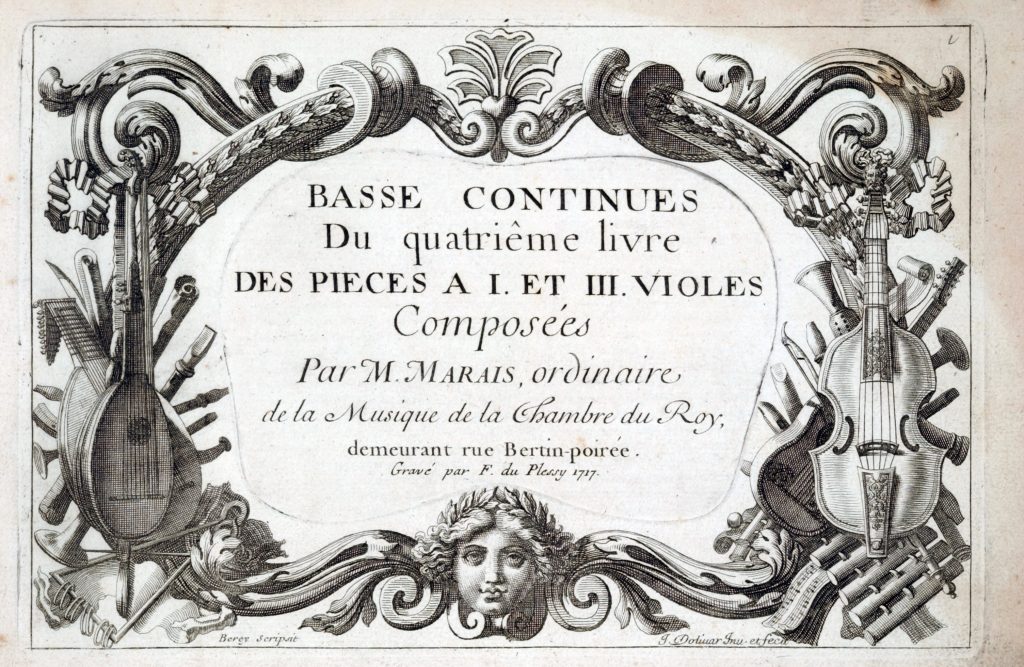
This extraordinary piece of music, titled ‘A description of the operation of the stone’, is a step-by- step account of an early 18th-century operation to remove a urinary bladder calculus. Thus it is a strange but illuminating intersection of music and medicine. Composed by viola da gamba virtuoso Marin Marais, a member of Louis XIV’s court orchestra, it is found in the last of five volumes of music he wrote for viols and harpsichord.
The details of the surgery (undertaken without anaesthetic) and the physical and emotional experience of the patient are conveyed both in words – there are 14 pithy annotations – and in the music. The patient ‘trembles at the sight’ of the ‘apparatus’ (operating table); his arms and legs are secured with ‘silk restraints’, and forceps are ‘introduced’. Marais, unsurprisingly, could draw upon first-hand experience; he underwent surgery in 1720 (aged 64) and lived to the age of 72.
Situate Le tableau de l’opération de la taille in its political, cultural and religious frameworks, to highlight issues and debates in notation, performance practice and music theory in France in this period.
James D. Franklin, ‘Surgery, note by note: Marin Marais’ Tableau de l’opération de la taille’, Hektoen International: A Journal of Medical Humanities, Summer 2012.
How has medicine been depicted in music?
This article presents a unique convergence of medical history and music in a piece written for the viol (viola da gamba) and continuo by the French composer and virtuoso viol player Marin Marais (Figure 1), a contemporary of Johann Sebastian Bach, depicting in music a surgical operation he endured at the age of 64 to remove a stone from his urinary bladder.