Published
Ein deutsches Requiem, nach Worten der heiligen Schrift
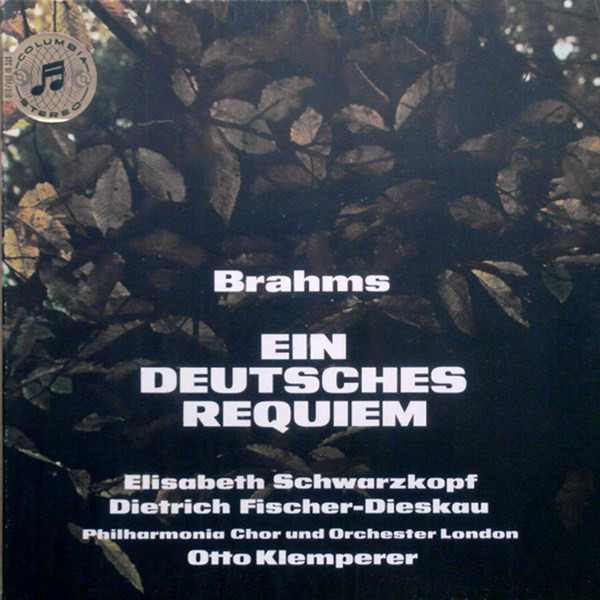
A German Requiem, to Words of the Holy Scriptures, Op. 45 (German: Ein deutsches Requiem, nach Worten der heiligen Schrift) by Johannes Brahms, is a large-scale work for chorus, orchestra, and soprano and baritone soloists, composed between 1865 and 1868. A German Requiem is sacred but non-liturgical, and unlike a long tradition of the Latin Requiem, A German Requiem, as its title states, is set in the German language.
Brahms’s mother died in February 1865, a loss that caused him much grief and may well have inspired Ein deutsches Requiem. Brahms’s lingering feelings over Robert Schumann’s death in July 1856 may also have been a motivation, though his reticence about such matters makes this uncertain.
The second movement used some previously abandoned musical material written in 1854, the year of Schumann’s mental collapse and attempted suicide, and of Brahms’s move to Düsseldorf to assist Clara Schumann and her young children.
Brahms completed all but what is now the fifth movement by August 1866. Johann Herbeck conducted the first three movements in Vienna on 1 December 1867. This partial premiere went poorly due to a misunderstanding in the timpanist’s score. Sections marked as fp (loud, then soft) were played as f (loud) or ff (very loud), essentially drowning out the rest of the ensemble in the fugal section of the third movement.
The final, seven-movement version of A German Requiem was premiered in Leipzig on 18 February 1869.
Brahms assembled the libretto himself. In contrast to the traditional Roman Catholic Requiem Mass, which employs a standardized text in Latin, the text is derived from the German Luther Bible.