Published
Le Grand Macabre
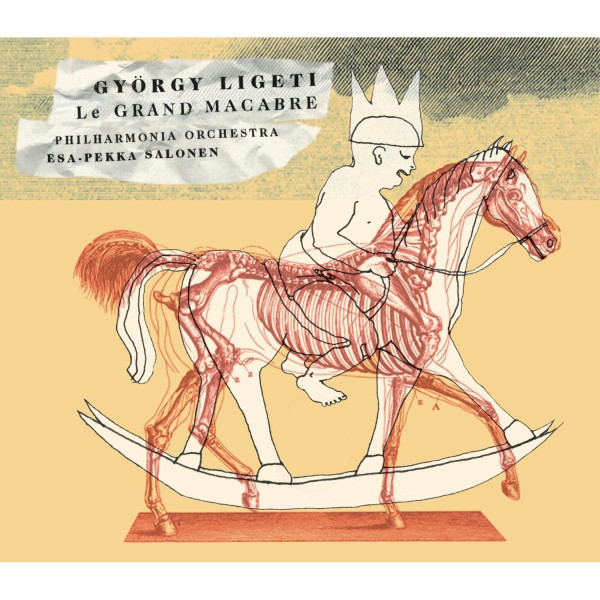
Described as an “anti-anti-opera”, Le Grande Macabre has two acts and lasts about 100 minutes. Le Grand Macabre was premiered in Stockholm on 12 April 1978. At least 30 productions have followed. For one in Paris in February 1997 (under the auspices of that summer’s Salzburg Festival), Ligeti the previous year prepared a revision, making cuts to Scenes 2 and 4, setting some of the originally spoken passages to music and removing others altogether. (As it turned out, the composer was annoyed by the Paris staging, by Peter Sellars, and expressed his displeasure publicly. Sellars, he said, had gone against his desire for ambiguity by explicitly depicting an Apocalypse set in the framework of the Chernobyl Disaster.)
An important underlying theme of Ligeti’s Grand Macabre is that of utopia and dystopia. Traditionally, dystopia and utopia have formed an alternative. Yet, as Andreas Dorschel argues, Ligeti and librettist Michael Meschke enact an intertwinement of dystopia and utopia, in a series of moves and countermoves: (1) Death threatens to eliminate all life. (2) The earth is saved from the fate of the destruction of life – “Death is dead” (II/4). (3) Yet “Breughelland” is and will remain a crude and cruel tyranny. (4) The farcical character of the whole calls into question whether any of the previous moves can be taken seriously. Ligeti/Meschke’s subversion of the antinomy of utopia and dystopia, introduced in the opening “Breughellandlied”, turns out to be in the spirit of Piet the Pot’s namesake Pieter Bruegel the Elder, as Dorschel’s interpretation of his 1567 painting Het Luilekkerland, an inspiration already to de Ghelderode, shows.