Published
Kindertotenlieder (Canciones a la muerte de los niños)
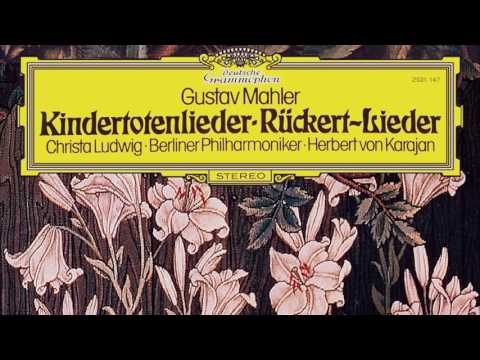
Kindertotenlieder (Songs on the Death of Children) is a song cycle for voice and orchestra by Gustav Mahler, lasting approximately twenty minutes. Its texts are drawn from poems by Friedrich Rückert.
The original Kindertotenlieder comprised a cycle of 425 poems written by Rückert in 1833–34 in an outpouring of grief after two of his children died within sixteen days of each other.
The sombre reception of the cycle has been intensified by the fact that four years after composing it, Mahler lost his four-year-old daughter Maria to scarlet fever. He wrote to Guido Adler: “I placed myself in the situation of having lost a child. Once I had actually lost my daughter, I could never have written these songs again.”
Regarding performance, the composer wrote: “These five songs are intended as one inseparable unit, and their performance must not interfere with their continuity.”
Kindertotenlieder (Songs on the Death of Children) was the work that came to mark Mahler’s tragic fate. Shortly after its première, Maria, his eldest daughter, died of scarlet fever and diphtheria. Alma, his wife, never forgave him for the work which, in her view, had drawn misfortune towards them by invoking the deaths of so many children, like those they had witnessed in their own family history.
Soon afterwards, Mahler was diagnosed with a heart condition that would eventually cause his death.
His marriage to Alma Schindler entered a period of crisis. He had asked her to abandon her musical studies and devote herself to caring for the family. Maria’s death precipitated Alma’s rebellion: she questioned the sacrifice of her talent and began a relationship with the architect Walter Gropius, later the founder of the Bauhaus.
Yet it was Mahler who popularised Wagner through his masterful interpretations.
Beset by these personal difficulties, Mahler consulted Sigmund Freud. The father of psychoanalysis probably diagnosed the obsessive neurosis that drove Mahler towards extremes of intolerance, with a certain sadistic tendency, and had earned him a reputation as a tyrant. Mahler quarrelled with everyone: performers, orchestral musicians, theatre staff, colleagues and critics.
Mahler expressed his state of mind in what became his Tenth Symphony, although he had attempted to avoid the “curse of the ninth” by not numbering Das Lied von der Erde (The Song of the Earth) as a symphony, despite its symphonic form. “For me, writing a symphony is like constructing a world.”
Mahler died from endocarditis that complicated the cardiovascular disease diagnosed in 1908, before taking up the directorship of the Metropolitan Opera House in New York, where he travelled with his wife and daughter.
After returning to Europe, he completed his Eighth Symphony and, following an intensive tour, developed a very high fever on 20 February 1911. He was diagnosed with endocarditis. He became the first patient to undergo a blood culture to detect the pathogen in the bloodstream—Germany, through figures such as Koch, Virchow and Helmholtz, then possessed the world’s most advanced medicine. The result revealed a streptococcus, a highly lethal organism in the pre-antibiotic era.
Mahler made history not only in music, but also in medicine.