Published
Symphony No. 5
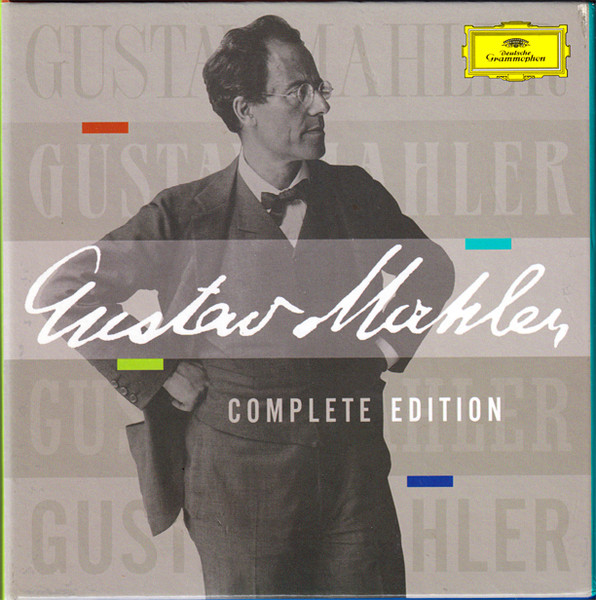
Gustav Mahler died on 18 May 1911, but parts of him had already died within his works, which evoked the end of our lives in every chord.
The son of a Jewish innkeeper, Mahler had experienced the deaths of six of his fourteen siblings. With that experience, it was almost impossible for the child prodigy not to transmit the profound melancholy heard in his early works, such as Das klagende Lied (The Song of Lamentation), his First Symphony, Titan, and his Second, Resurrection, which includes a funeral march.
Shortly before composing his Fifth Symphony, he suffered a gastrointestinal haemorrhage that brought him close to death. For this reason, the symphony represented for him the triumph of life.
But it was Kindertotenlieder (Songs on the Death of Children) that came to mark his tragic fate. Shortly after its première, Maria, his eldest daughter, died of scarlet fever and diphtheria. Alma, his wife, never forgave him for the work which, in her view, had drawn misfortune towards them by invoking the deaths of so many children, like those they had witnessed in their own family history.
Soon afterwards, Mahler was diagnosed with a heart condition that would eventually cause his death.
“For me, writing a symphony is like constructing a world.”
Mahler died from endocarditis that complicated the cardiovascular disease diagnosed in 1908, before taking up the directorship of the Metropolitan Opera House in New York, where he travelled with his wife and daughter.
After returning to Europe, he completed his Eighth Symphony and, following an intensive tour, developed a very high fever on 20 February 1911. He was diagnosed with endocarditis. He became the first patient to undergo a blood culture to detect the pathogen in the bloodstream—Germany, through figures such as Koch, Virchow and Helmholtz, then possessed the world’s most advanced medicine. The result revealed a streptococcus, a highly lethal organism in the pre-antibiotic era.
Mahler made history not only in music, but also in medicine.
The musician was buried in Grinzing Cemetery beneath a headstone bearing only his name. Despite his request for an intimate ceremony—Alma did not attend on medical advice—Arnold Schoenberg, Bruno Walter and the painter Gustav Klimt were present.
(…)
Until her death in 1960, Alma Schindler was a fierce advocate for the dissemination of Mahler’s music, which had been banned by the Nazi regime.
Accustomed to criticism, Mahler said: “Never allow yourself to be guided by the opinion of your contemporaries. Persevere on your path.”
In no other symphony did Mahler struggle so intensely with the work’s instrumentation. He revised it again in 1911, the year of his death. This version did not appear in print until 1964, as part of the Mahler Complete Edition.