Published
Auferstehung (Sinfonía n.º 2)
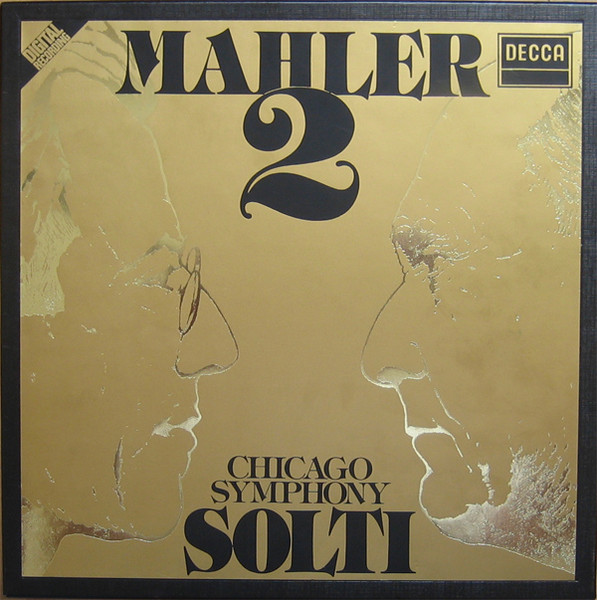
The symphony originated as Totenfeier (Funeral Rites), a single-movement symphonic poem based on Dziady, the poetic drama by the Polish poet Adam Mickiewicz, which Mahler completed in 1888.
In 1894 Hans von Bülow died, and at his funeral Mahler heard a setting of Aufersteh’n (Resurrection), the ode by the German poet Friedrich Gottlieb Klopstock. It was a revelation. Mahler decided to conclude the work with his own setting of the poem, making several alterations to the text.
The first movement represents a funeral and responds to questions such as: “Is there life after death?”
I. Allegro maestoso.
Musically, the first movement—despite its variety of episodes—evokes a funeral march and is violent and wrathful. It is an extensive sonata form. The movement occupies a prominent position within the symphony: the so-called Funeral Ceremony is the first of its two monumental frames, its counterpart being the closing movement, Resurrection. After completing the first version, Mahler initially entitled the movement “Symphony in C minor.” He later changed the title to Todtenfeier, under which it is sometimes performed independently from the complete symphony. The Funeral Ceremony is loosely based on sonata form. The exposition begins with a chord in the lower strings, followed by the development of an agitated figure and, eventually, a prominent motif in the lower strings. The final movement takes up this figure again. The winds then intone the first movement’s principal theme.
The theme subsequently assumes the character of a march, derived from its second part. A later lyrical phrase may be regarded as a second theme, ending in a dramatic climax in C minor. This is followed by a repetition of the exposition in which a chorale-like idea appears in march style.
The march character becomes increasingly assertive, at times giving the music a military quality. The movement reaches its climax in a repeatedly hammered dissonant chord from the full orchestra, signifying the collapse of the entire event. A recapitulation-like section then begins with the low-string motif. A threatening descending figure in the strings announces the coda, after which the march idea is presented by the wind instruments. The familiar forward drive returns but finds no real outlet and collapses into exhaustion. A few wind chords, accompanied by restless figures in the low strings and drum rolls, close the movement before a chromatically descending orchestral scale causes the action to collapse one final time.
At the end of the movement, Mahler asks for a five-minute pause before the second.