Published
Stabat Mater
Stabat Mater dolorosa
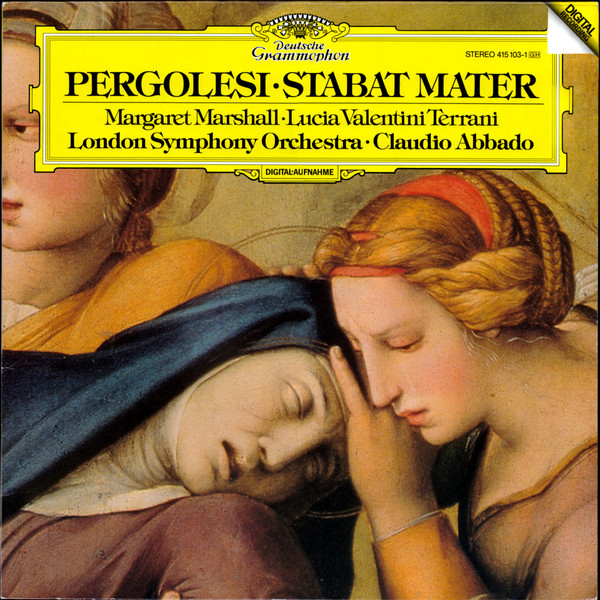
The compositional tradition of the Stabat Mater is founded on the poem of the same name. Its authorship is uncertain, although it is generally attributed to the Franciscan Jacopone da Todi (d. 1306). The description of the Virgin’s loving sorrow at the feet of her dying son on the cross soon became the basis for musical works, initially as a plainchant sequence and later in polyphonic settings by composers including Josquin des Prez and Giovanni Pierluigi da Palestrina. It was not until 1727, through the intervention of Benedict XIII, that the text was officially incorporated into the Roman Missal as part of the observance of the Seven Sorrows on the final Friday of Lent. This helps explain why the Stabat Mater was cultivated most intensely during the eighteenth century, particularly in Italy. In contrast to the large polyphonic forces typically used in Rome, reflecting the grandeur and majesty of papal celebrations, Naples favoured a smaller and more intimate scoring of one or two voices with violins and continuo. The coexistence of these two approaches is exemplified by the Stabat Mater for ten voices and continuo, composed by Domenico Scarlatti between 1715 and 1719 while he was maestro of the Roman Cappella Giulia, and Giovanni Battista Pergolesi’s Stabat Mater for two voices, violins and continuo. Pergolesi composed the latter in Naples shortly before his death at the age of twenty-six, at the request of a wealthy confraternity of nobles for its annual observance in the Church of Santa Maria dei Dolori.
Pergolesi’s Stabat Mater achieved immediate fame, contributing to the expansion and consolidation of the genre. Published in London in 1749, it gave rise to numerous later editions and arrangements, including one by Bach. The work’s most characteristic stylistic quality—luminous melancholy and tranquil sorrow—is already present in its opening bars: a sequence of piercing second dissonances resolving in a cascade.