Published
Symphony No. 6 (Pathétique Symphony)
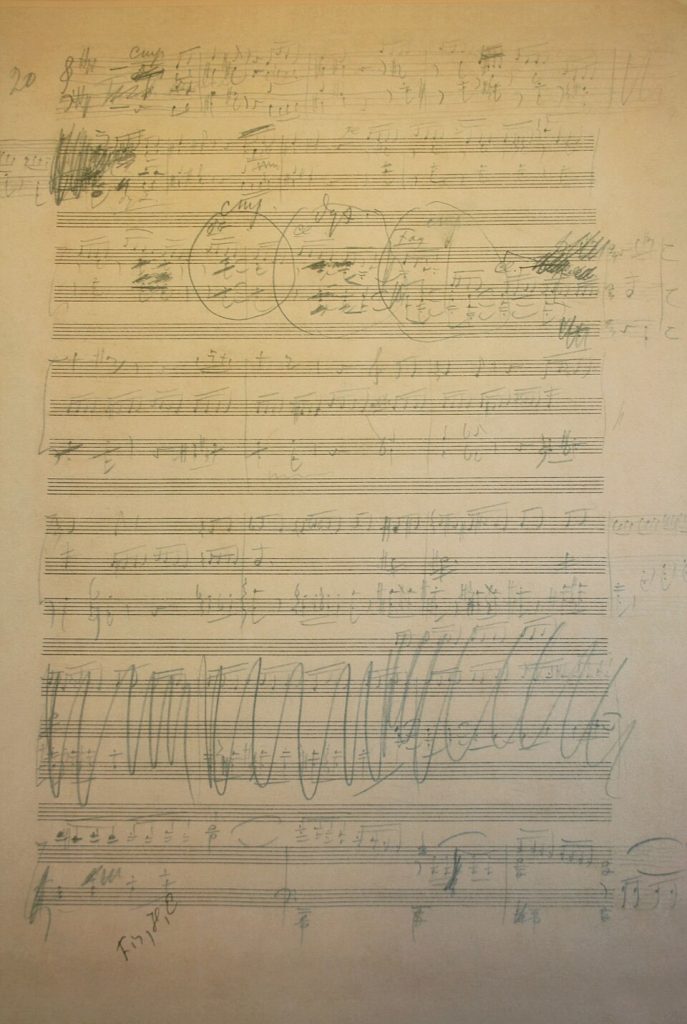
It was the last of Tchaikovsky’s compositions premiered in his lifetime; his very last composition, the single-movement Third Piano Concerto, Op. 75, which was completed shortly before his death, received a posthumous premiere.
Tchaikovsky critic Richard Taruskin writes:
Suicide theories were much stimulated by the Sixth Symphony, which was first performed under the composer’s baton only nine days before his demise, with its lugubrious finale (ending morendo, ‘dying away’), its brief but conspicuous allusion to the Orthodox requiem liturgy in the first movement and above all its easily misread subtitle. … When the symphony was done again a couple of weeks later, in memoriam and with subtitle in place, everyone listened hard for portents, and that is how the symphony became a transparent suicide note. Depression was the first diagnosis. “Homosexual tragedy” came later.
The critic Alexander Poznansky wrote, “Since the arrival of the ‘court of honour’ theory in the West, performances of Tchaikovsky’s last symphony are almost invariably accompanied by annotations treating it as a testimony of homosexual martyrdom.” But critic David Brown calls the idea of the Sixth Symphony as a suicide note “patent nonsense”.[24] Other scholars, including Michael Paul Smith, believe that with or without the supposed “court of honour” sentence, Tchaikovsky could not have known the time of his death while writing the piece. There is also evidence that Tchaikovsky was unlikely to have been depressed while writing it, with his brother noting of him after he had sent the manuscript for publishing, “I had not seen him so bright for a long time past.”
Tchaikovsky specialist David Brown suggests that the symphony deals with the power of fate in life and death.
That program reads, “The ultimate essence … of the symphony is Life. First part—all impulse, passion, confidence, thirst for activity. Must be short (the finale death—result of collapse). Second part love: third disappointments; fourth ends dying away (also short).”