Published
A Letter from Souls of The Dead
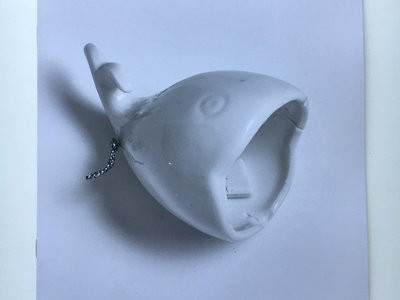
I have had a habit of collecting found and discarded objects over the years. Though it was a slow process, they started to form some natural groupings. It’s an extension of my cassette practice to expand the realm of reminiscence beyond my territory and consciousness — a sort of collective consciousness in order to reach out to something universal. Yeah, those are “dead” as they are no longer in use. But “death” is an ambiguous notion that allows us various interpretations. If we die, that terminates all biological functions which sustain a living organism, and the body will be gone. In the case of the materials, the form itself remains, but something will be lost. In both cases, I believe spirits remain, or memories or the stream of consciousness is preserved afterlife, though those are invisible.
I think all materials I used for this exhibition are related to the title A Letter from Souls of The Dead. And, that’s from my interest in Spiritualism. Some people believe death is the pure end but I believe something goes on. I’m fascinated by the idea of communicating with the spirits of the dead, the relationship of matter and spirit, and a form of séance to demonstrate the mediumship. Having said that, let me be clear, my belief is not from the religious movement of Spiritualism, which originated from the supernatural events at a farmhouse in Hydesville, N.Y., in the mid 19th century then spread out to mainly in the English speaking countries. It’s more related to animism and shamanism. These sorts of practices and beliefs were common throughout human history and in various cultures. And, my upbringing definitely helped to nurture my interest
As you know, I developed my career as a musician first, and those experiences helped me to shape the foundation as a performer. I was playing my cassette field recording, which I consider sounds of past memories, and a sense of communication with the dead was a perfect match. I hypnotized myself before the show, empty my mind, and stopped the stream of consciousness. Through strong meditation and concentration, I get into a strong trance state. And, if the audience joins in, it works as a communal experience. I had made my own “ritual” and I started bringing many found objects on stage as ornaments, the same as the setting for the candomblé or macumba. It’s like a spectacle-slash-performance and not really a music concert as the visual presentation is as equally important as the aural presentation. I wanted to create an animistic sort of space — everything has aesthetic and cultural value.